
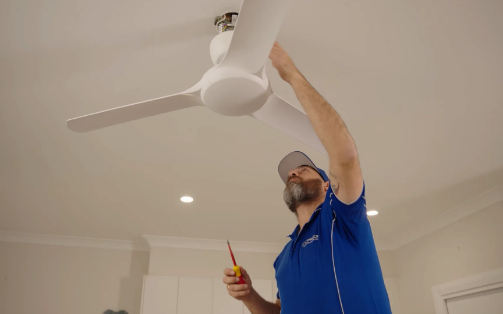
Adelaide summers can be hot, and keeping cool can get expensive — especially if you rely heavily on air conditioning. That’s why many households and apartments turn to ceiling fans as a practical, efficient alternative. Ceiling fans don’t lower the actual temperature in a room, but they create a wind-chill effect by circulating air — and that simple breeze can make you feel significantly cooler.
Because they use a fraction of the electricity of air conditioners — often just 50–75 watts compared to hundreds or thousands of watts — ceiling fans are much cheaper to run. For people living in Adelaide, where energy costs and summer heat go hand in hand, this energy efficiency can translate into real savings on monthly bills, while still providing comfort.
Beyond cost, ceiling fans offer flexibility: they can serve as the primary cooling method during mild to moderately warm days, or complement air conditioning during extreme heat — helping reduce overall cooling costs and energy usage.
How Ceiling Fans Work — And Why They’re Effective
A ceiling fan works not by cooling air like an air conditioner, but by improving air movement. As the blades spin, they push air downward, creating a breeze that speeds up sweat evaporation on your skin. This evaporation triggers your body’s natural cooling mechanism, making you feel cooler even though the room temperature remains the same.
For many people, this breeze alone is enough to stay comfortable — especially in dry or moderately warm conditions typical of many Adelaide households. For others, when heat becomes extreme, combining a fan with air conditioning can spread the cooled air more evenly across a room.
What’s also useful is that many modern ceiling fans come with reversible direction settings. In summer, the blades should spin counterclockwise (as viewed from below) to push air down. In cooler months, reversing the direction can help circulate warm air downward — helping maintain comfort and reduce heating costs.
Choosing the Right Ceiling Fan for Your Space
Not all ceiling fans are created equal, and picking the right one requires some thought. Key considerations include room size, blade sweep (the diameter the blades cover), airflow capacity, energy efficiency, and noise levels.
For a standard medium-sized room, a fan with a 52-inch (about 132 cm) blade sweep is often considered optimal. If you have larger living rooms or open-plan spaces, choosing a fan with larger blades or higher airflow capacity will make a noticeable difference.
Energy consumption is another important factor. Fans with efficient motors (for example, brushless DC motors) use less electricity while delivering strong airflow — helping you stay cool without spiking your power bill.
Lastly, consider installation and maintenance. Ceiling fans generally require little maintenance, and because they’re mounted to the ceiling, they don’t take up floor space — an advantage for smaller apartments or rooms.
Comfort, Health, and Energy — Multiple Benefits in One
Using ceiling fans wisely offers multiple advantages beyond simple cooling. Improved air circulation can help with ventilation and indoor air quality — preventing stuffiness and promoting airflow especially in homes that may otherwise become stagnant.
From an environmental perspective, lower energy usage means reduced electricity demand and lower greenhouse-gas emissions — a benefit for both your budget and the planet.
In practical terms, ceiling fans also offer flexibility: on milder days, you may not need air conditioning at all. On hotter days, combining ceiling fans with air conditioning can allow you to set the thermostat a few degrees higher — reducing overall power consumption while maintaining comfort.
Common Misconceptions — What Ceiling Fans
Don’t Do
It’s important to recognise what ceiling fans can and cannot do. A fan does not lower the actual temperature of a room. If the outside heat becomes extreme, fans alone may not provide sufficient cooling — especially when humidity is high.
For maximum comfort during heat waves, ceiling fans often work best as a supplement to air conditioning — rather than a complete replacement. In such cases, using them together thoughtfully helps balance cooling effectiveness and energy efficiency.
Additionally, size and placement matter: a fan that’s too small for a room may provide little benefit, and incorrect installation or poor airflow design can reduce effectiveness.
Why Ceiling Fans Make Sense for Adelaide Homes
Adelaide’s climate — with warm to hot summers and mild winters — makes ceiling fans particularly suitable. On many summer days, a good ceiling fan can deliver sufficient comfort without expensive cooling systems. On cooler days or evenings, reversing the fan’s direction can help circulate warm air, improving comfort during winter months.
For many households, this versatility — combined with low energy use, quiet operation, and minimal maintenance — makes ceiling fans a smart, cost-effective investment. They suit apartments, houses, bedrooms, living rooms and even outdoor covered areas when appropriately rated.
Given rising energy costs and growing awareness of sustainability, ceiling fans offer a practical, environmentally friendly way to manage indoor comfort. They strike a balance between effectiveness, cost, and energy efficiency — ideal for modern Adelaide living.
Final Thoughts: Smart Cooling with Ceiling Fans
Ceiling fans aren’t a silver-bullet solution for every weather scenario — but used wisely, they deliver a remarkable blend of comfort, cost savings, energy efficiency, and flexibility. Whether you’re cooling a bedroom, living room, or apartment, selecting the right fan and using it properly can make a significant difference to your everyday comfort and energy bills.
If you’re looking to explore your options and find quality ceiling fans tailored to Australian homes, check out potential products via ceiling fans Adelaide. For assistance finding local stockists or store-location information, you can also view this ceiling fans Adelaide link.